I was sitting at my desk last Tuesday, staring at a half-eaten salad while simultaneously answering a frantic client email and scrolling through a news feed, when I realized I couldn’t even tell you what the dressing tasted like. We’ve been sold this idea that mindful eating requires expensive organic retreats, silent meditation rooms, or a complete lifestyle overhaul that feels more like a chore than a benefit. Honestly, the way people talk about it makes it sound so intimidating, as if you need a PhD in nutrition just to enjoy a sandwich without feeling guilty.
But here’s the truth: it doesn’t have to be that complicated. I’m not here to give you a list of restrictive rules or tell you to spend a fortune on “superfoods.” Instead, I want to share some simple, practical shifts that I’ve used to reclaim my relationship with food amidst the chaos of freelance life. We’re going to look at how you can actually enjoy your meals again—without the stress—by using a few no-nonsense techniques that fit into a busy, real-world schedule.
Table of Contents
Listening to Your Bodys Natural Hunger and Fullness Cues

One of the biggest hurdles I faced when I first started this journey was realizing how much I was eating simply because the clock said it was lunchtime, not because I was actually hungry. We’ve become so conditioned to live by schedules that we completely tune out our internal compass. Learning to recognize your hunger and fullness cues is like relearning a language you haven’t spoken in years. It’s about pausing mid-afternoon to ask yourself, “Am I actually craving something, or am I just bored/stressed?”
It’s also incredibly helpful to pay attention to the physical sensations that happen as you eat. Instead of waiting until you feel “stuffed” or uncomfortably bloated, try to notice that subtle shift when your stomach feels satisfied and your energy begins to level out. Developing this kind of emotional eating awareness helps you distinguish between a genuine need for fuel and a desire to soothe stress with snacks. Once you start honoring those signals, you’ll find that you feel much more in tune with your body’s actual needs.
Gentle Sensory Eating Techniques for Every Meal

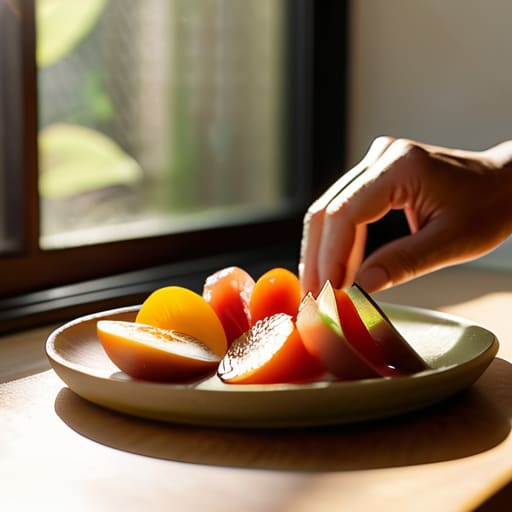
Once you’ve started tuning into those internal hunger and fullness cues, the next step is to actually engage your senses. I used to be the person who could inhale a salad while answering Slack messages, never once noticing the flavor. To break that habit, I started practicing a few sensory eating techniques that turn a routine meal into a grounding experience. Start by really looking at your plate. Notice the vibrant colors of your veggies or the texture of your grains. It sounds a little “woo-woo,” I know, but taking a moment to appreciate the visual beauty of your food helps shift your brain from “autopilot mode” into a state of presence.
When you actually take a bite, try to slow down enough to notice the different layers of flavor and temperature. Is there a hint of citrus? A crunch from a toasted seed? By focusing on these details, you’re practicing distraction-free eating, which is a total game-changer. This intentionality doesn’t just make the food taste better; it also provides significant mindful eating benefits for digestion, as your body can better prepare to process what you’re consuming. It’s all about turning a chore into a tiny, delicious ritual.
Small Shifts for a More Mindful Plate
- Ditch the digital distractions. It’s so tempting to scroll through Instagram or catch up on emails while we eat, but I’ve found that even just putting my phone in another room makes my meals feel so much more intentional.
- Try the “pause and check” method. About halfway through your meal, take a quick second to check in with yourself. Are you still actually hungry, or are you just eating because the food is right in front of you?
- Slow down your pace. I know, I know—life moves fast—but try putting your fork down between bites. It gives your brain a chance to catch up with your stomach, which is a total game-changer for digestion.
- Create a cozy ritual. You don’t need a fancy setup, but even just lighting a small candle or playing some soft acoustic music can signal to your brain that it’s time to transition from “work mode” to “nourishment mode.”
- Practice self-compassion when things get messy. Some days, life is just too chaotic to eat perfectly mindfully, and that’s okay! Don’t beat yourself up if you end up inhaling a snack on the go; just aim to bring that awareness back at your next meal.
Small Steps for a More Mindful Plate
Start small by picking just one meal a day to practice these techniques; you don’t have to overhaul your entire eating routine overnight to see a difference.
Remember to be kind to yourself on the days when life gets chaotic and you end up eating on the go—mindfulness is a practice, not a perfection game.
Pay attention to how different foods actually make you feel physically and emotionally, as this connection is the real key to long-term wellness.
A Little Food for Thought
“Mindful eating isn’t about following a strict set of rules or being perfect at every meal; it’s simply about slowing down enough to actually enjoy the life you’re nourishing.”
Emma Thompson
Bringing It All Home

As we wrap things up, I want you to remember that mindful eating isn’t about following a strict set of rules or achieving perfection. It’s really just about reconnecting with yourself. Whether you’re focusing on tuning into those subtle hunger cues or slowing down to actually experience the textures and flavors of your dinner, every small step counts. We’ve talked about how listening to your body and engaging your senses can transform a rushed meal into a grounding experience. It might feel a little clunky at first—honestly, I still have days where I find myself inhaling a snack while checking my inbox—but the goal is simply to build awareness one bite at a time.
Please be kind to yourself as you navigate this change. Some days will feel effortless, and others might feel like a struggle, but that is perfectly okay. Think of this as a gentle practice rather than a daunting chore. You don’t have to overhaul your entire lifestyle overnight; just aim to find a little more presence and peace at the table today. You deserve to nourish not just your body, but your spirit too. Let’s keep moving forward, one delicious, intentional moment at a time. You’ve got this!
Frequently Asked Questions
How do I stay mindful when I'm eating on the go or during a busy workday?
I totally get it—some days it feels like I’m basically inhaling my lunch between Zoom calls. When I’m in a rush, I try the “one-minute reset.” Before I take that first bite, I pause for sixty seconds just to breathe and notice my surroundings. If I’m walking, I focus on the texture of my snack rather than my inbox. It’s not about perfection; it’s just about reclaiming a tiny slice of peace.
Is it possible to practice mindful eating even if I have a busy social life or eat out with friends often?
Oh, I get this question all the time! Honestly, I used to think mindful eating meant I had to sit in a quiet room with a single candle, but that’s just not realistic for most of us. You can absolutely practice it while grabbing tacos with friends! It’s less about the silence and more about being present. Even in a loud restaurant, you can still take a moment to actually taste your food and check in with yourself.
How can I tell the difference between actual physical hunger and emotional cravings when I'm trying to listen to my body?
This is such a common struggle, and honestly, I’ve been there more times than I’d like to admit! A good trick I use is the “Apple Test.” If you feel like you’d happily eat a plain apple (or a piece of broccoli), you’re likely physically hungry. But if you’re specifically dreaming of chocolate or salty chips, that’s usually an emotional craving. Physical hunger builds slowly; emotional cravings tend to hit like a sudden wave.